


In this article, we will talk about ten professions that are considered highly in demand in Germany. To fill thousands of vacancies, employers actively attract foreign workers and do not impose strict requirements on candidates — neither for language nor for prior experience. This is why the chances for migrants to find a job in these professions, once their skills are confirmed, are high.
The State of the German Labor Market in 2026
According to the Bundesagentur für Arbeit, in August 2025 the number of unemployed people reached 3,025,140, surpassing the peak of the previous unemployment rise in February 2015.
By November 2025, unemployment reached 6.2%, and researchers forecast continued growth at least until the end of 2026.
Why is this happening?
- Global crises and COVID-19: During the pandemic, many residents of Germany chose to “wait it out,” focus on themselves, and not work. Government benefits allowed people to take long breaks. Reduced working hours (Kurzarbeit) instead of layoffs did not help — unemployment still grew.
- Skills mismatch: The rapid development of technology created thousands of new IT vacancies, but few people have adequate programming skills.
- Aging population: Young specialists choose modern digital careers — blogging, SMM, influencer marketing — instead of engineering or driving. There is no one to replace retirees.
- Minijobs: During crises, part-time workers lose their jobs first, causing short-term unemployment spikes.
This situation has resulted in 163 shortage professions in Germany — and below we cover ten of the most promising ones for migrants. Viel Spaß beim Lesen!
10 In-Demand Professions in Germany
We analyzed the largest German job platforms and relied on data from the Bundesagentur für Arbeit, Make-it-in-Germany, and StepStone salary reports to identify ten professions with specific specializations where foreigners have good chances of getting hired even with limited language skills and little experience.
1. IT Specialists
Why in demand:
Digitalization, automation, and Industry 4.0 fuel constant demand for developers, cybersecurity specialists, and data analysts. More than 20,000 positions are open across the country. Companies look for skilled foreign specialists because the local market cannot supply enough experts.
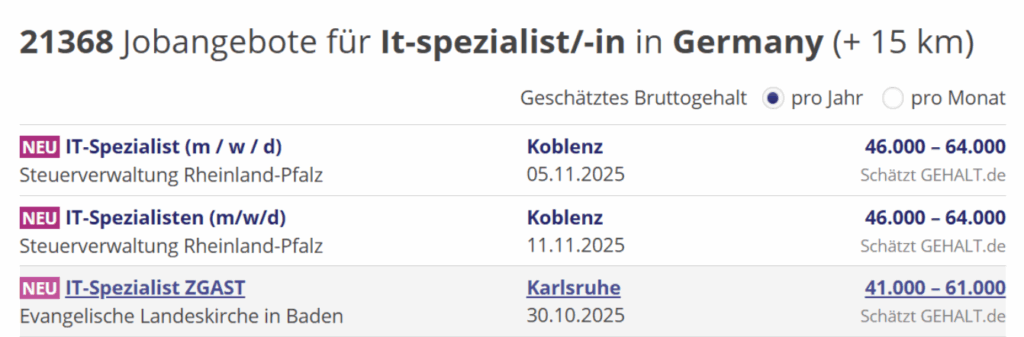
Popular specializations among migrants:
- Data Analyst (€64,311–€81,774)
- Software Developer (€36,325–€54,134)
- IT Security Specialist (€48,433–€77,277)
Chances for foreigners:
High, if you have practical skills and English/German at B1–B2. You can practice development and improve your language skills in a Weiterbildung program — choose one that includes job placement support.
2. Engineers and Technicians
Why in demand:
Germany’s mechanical engineering, automotive industry, and energy sectors urgently need engineers to support production and the transition to green technologies. There are more than 17,000 open vacancies.
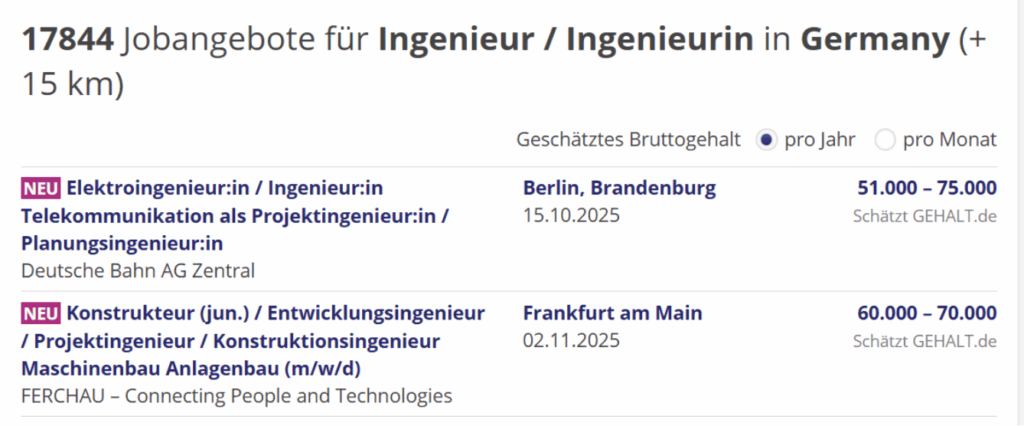
Popular specializations among migrants:
- Automation Engineer (€46,011–€73,658)
- Design Engineer (€46,011–€73,658)
- Automotive Engineer (€41,115–€68,036)
- Renewable Energy Engineer (€46,415–€75,677)
- AI Engineer (€46,415–€75,677)
Chances for foreigners:
Good for qualified specialists. Employers are ready to sponsor work visas and recognize foreign diplomas when qualifications are confirmed. High-level German is not mandatory.
3. Medical and Healthcare Workers
Why in demand:
Germany’s aging population increases the demand for care and medical services. Hospitals and nursing homes are constantly hiring.
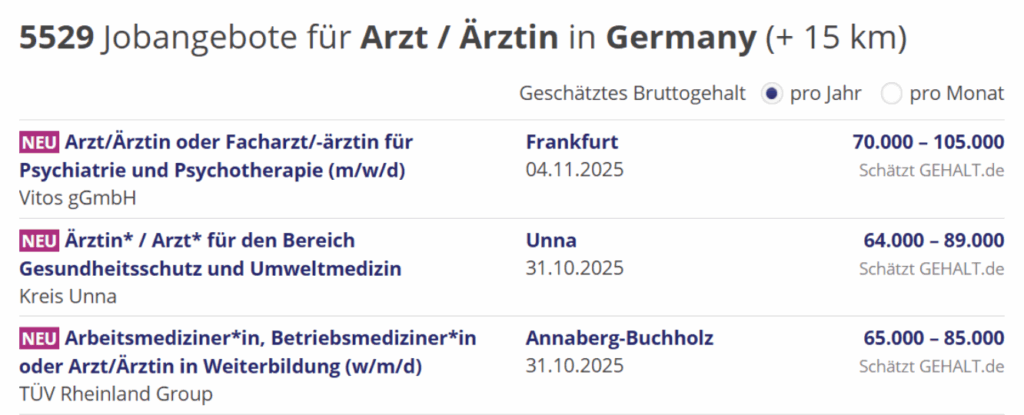
Popular specializations among migrants:
- General Practitioner in hospitals (€46,392–€60,943)
- Geriatric Care Doctor (€46,900–€58,476)
- Family Doctor / Therapist (€28,544–€36,325)
- Rehabilitation Doctor (€63,153–€92,603)
Chances for foreigners:
Good, especially with recognized qualifications and medical German (B1–B2). Germany actively recruits medical personnel from abroad.
4. Accountants
Why in demand:
The number of companies in Germany is growing, and all of them need accountants — either in-house or outsourced. Aging staff and insufficient digital skills create a shortage of more than 10,000 vacancies.
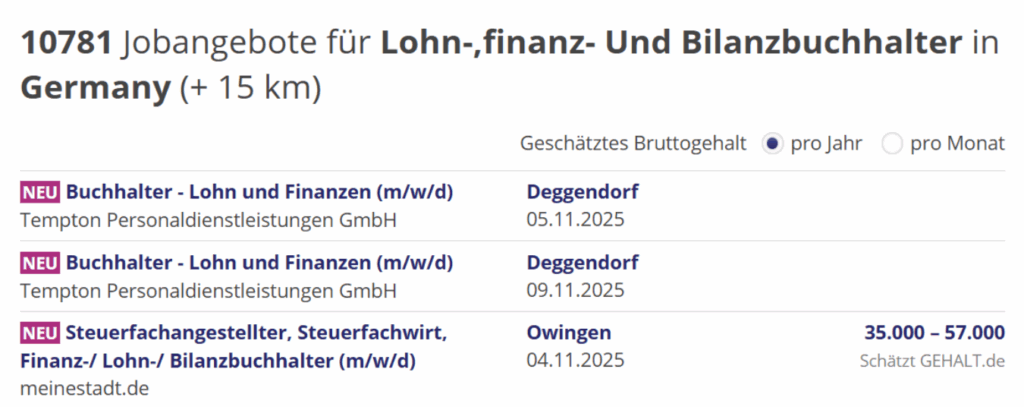
Popular specializations:
- Payroll Accountant (€39,470–€58,907)
- Financial Accountant (€38,726–€56,505)
- Balance Sheet Accountant (€38,726–€56,505)
Chances for foreigners:
High, especially with Weiterbildung, German B1–B2, and a German-recognized certificate.
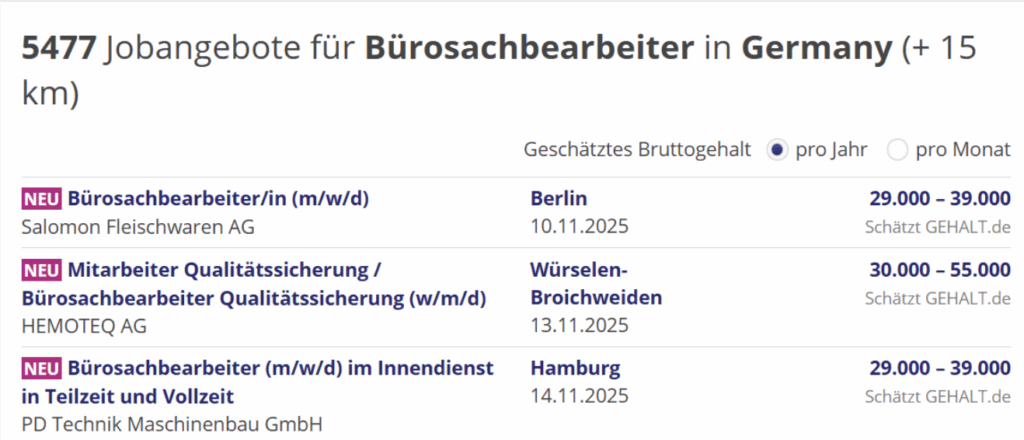
5. Office Specialists
Why in demand:
Germans are accustomed to offline work and continue renting office spaces. Offices require management, and companies need HR staff for recruitment, onboarding, payroll, and employee support.
Popular specializations among migrants:
- Office Manager (€35,284–€44,495)
- HR Specialist (HR-Sachbearbeiter) (€31,200–€41,930)
Chances for foreigners
Good for those with B2 German or competent English. HR roles require knowledge of labor law and HR practices — these can be learned through short-term courses.
At DWW Akademie, you can train as an accountant or HR/office specialist from scratch, using simplified German (B1–B2). After training, you receive a German certificate and job search support.
6. Drivers
Why in demand:
Domestic and international transport networks are expanding, and logistics is a critical sector with a significant shortage of LKW (truck) drivers.

Popular specializations among migrants:
- Truck Driver (€27,001–€32,980)
- Bus Driver (€27,114–€35,030)
Chances for foreigners:
Good — many companies offer training. Employers typically require “good German skills,” but communication in this field is limited and not the main priority.
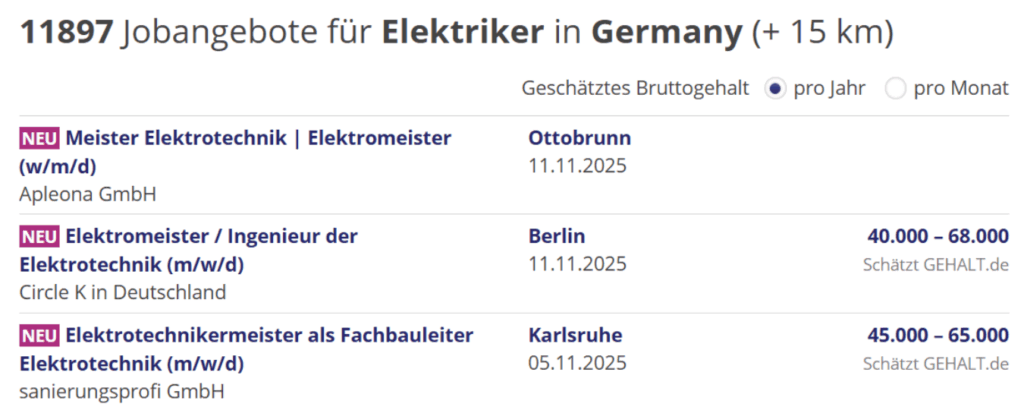
7. Skilled Trades (Handwerk)
Why in demand:
Germany continuously builds large infrastructure and housing projects, and repairs aging buildings — but lacks qualified tradespeople.
Popular specializations among migrants:
- Electricians (€33,232–€47,972)
- Plumbers (€40,521–€50,705)
- Welders / Carpenters (€30,673–€41,255)
Chances for foreigners:
Good with proof of experience. German level is rarely specified, but computer skills (MS Office, digital tools) are important.
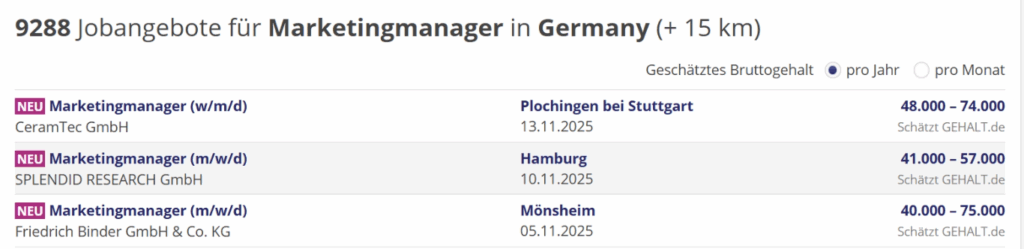
8. Marketing Specialists (Marketingmanager)
Why in demand:
Demand is rising for digital marketing, social media management, analytics, and online promotion. German companies are expanding internationally and need specialists who can work with data and run digital campaigns. E-commerce growth and globalization make this field especially relevant.
Popular specializations among migrants:
- SMM Manager (€33,450–€55,092)
- SEO Specialist (€44,370–€55,663)
- E-commerce Manager (€45,257–€56,777)
Chances for foreigners:
Good, especially in digital fields (SEO, SMM, performance, email marketing, e-commerce). German level B2–C1 is typically required.
9. Logistics Specialists (Logistiker)
Why in demand:
Supply chains are becoming more complex, e-commerce keeps growing, and warehouse automation creates demand for specialists who can manage processes and ensure smooth logistics operations.

Popular specializations among migrants:
- Warehouse Logistics Specialist (€41,742–€67,702)
- Dispatcher / Logistics Operations Coordinator (€43,590–€71,046)
Chances for foreigners:
Good, especially for practical roles (warehouse operators, coordinators). Higher-level positions require German at C1+, while support roles require B1–B2.
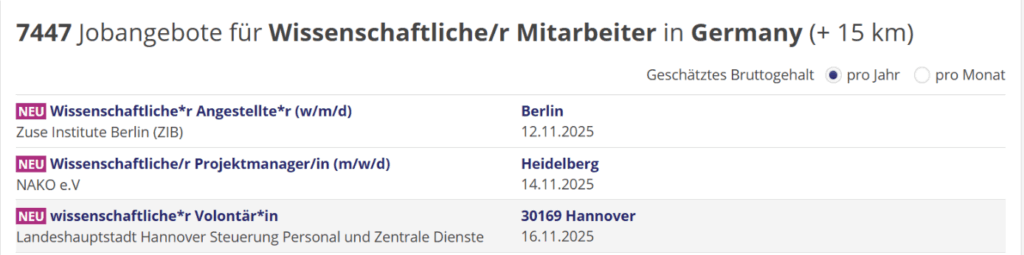
10. Scientists and Researchers
Why in demand:
Germany invests heavily in biotechnology, medical research, AI, renewable energy, mechanical engineering, and chemical industries — all experiencing a constant shortage of specialists. Due to an aging workforce and competition with the US and UK, German universities and private labs actively recruit researchers from abroad.
Popular specializations among migrants:
- Chemical Engineer (€46,415–€75,677)
- Medical Researcher (R&D) (€43,232–€66,704)
- Biochemist (€59,645–€76,434)
Chances for foreigners:
Very high. A PhD and research experience matter more than German language proficiency. English is more important for publishing and collaborating internationally.
Summary Table
| Profession | Popular Specializations | Average Salary, € | Language Requirements | Chances for Foreigners |
|---|---|---|---|---|
| IT Specialists | Data Analyst, Software Developer, IT-Security | 36–81k | B1–B2 / EN | Very high |
| Engineers & Technicians | Automation, Design, Automotive, Renewables, AI | 41–75k | B1–B2 | High |
| Medical & Healthcare | General Practice, Geriatrics, Rehab, Therapy | 28–92k | B1–B2 Medizin | High |
| Accountants | Payroll, Financial Accounting, Balance Sheet | 38–58k | B1–B2 | High |
| Office / HR Specialists | Office Manager, HR-Sachbearbeiter | 31–44k | B2 | Medium–High |
| Drivers | LKW-Fahrer, Busfahrer | 27–35k | A2–B1 | High |
| Skilled Trades | Electrician, Plumber, Welder, Carpenter | 30–50k | A2–B1 | High |
| Marketing | SMM, SEO, E-commerce | 33–56k | B2–C1 | Medium–High |
| Logistics | Warehouse Logistics, Dispatcher | 41–71k | B1–C1 | Medium–High |
| Scientists & Researchers | Chemistry, Biochemistry, R&D | 43–76k | EN / B1 | Very High |
How to Get a Job in These Fields
As we’ve seen, foreigners can get hired in Germany even without fluent German. What matters is proving that you understand the job requirements in Germany and have some practical experience — either from your home country or gained locally.
If your diploma is not recognized, confirm your qualification or switch to a more in-demand profession through Weiterbildung. We described how to start fully funded training (100% state financing) in a separate article.
Sources:
- Bundesagentur für Arbeit — Arbeitsmarktbericht 2025
- Make-it-in-Germany — Fachkräfte und Engpassberufe, 2025
- Verein Deutscher Ingenieure (VDI) — Ingenieurmonitor 2025
- StepStone Gehaltsreport 2025
- Gehalt.de — Gehaltsdaten nach Berufsfeldern, 2025


Leave a Reply